Key Takeaways
- A swollen eyelid often comes from rubbing your eyes, a clogged gland, or allergies.
- Swelling in one eye usually points to a sty or irritant, while both eyes puffing up suggests allergies or a cold.
- Itchy and pink eyes typically mean allergies, painful and tender eyes point to an infection, and crusty lashes may indicate eyelid inflammation.
- Warm rinses, brief cold packs, and skipping makeup can calm mild swelling at home.
- See an eye doctor if swelling lasts more than 3 days or comes with fever or vision changes.
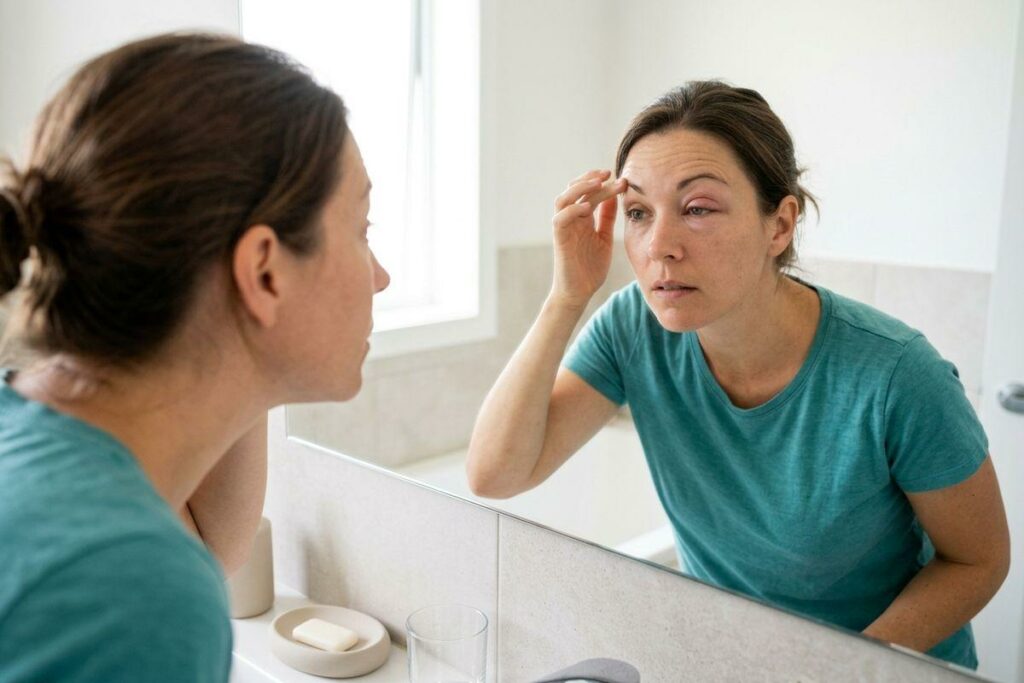
You wake up, glance in the mirror, and one eyelid looks puffy and heavy. It happens to almost everyone at some point, and the reason is usually simple. Our team at the Optometric Group of Fontana, Upland and Rancho Cucamonga sees this often.
Swollen eyelids usually come from everyday irritation like rubbing your eyes, a clogged gland along your eyelid, or an allergic reaction to something in the air.
Common Reasons Behind a Swollen Eyelid
A swollen eyelid can show up for many reasons, and they are usually harmless. A little dirt, a clogged gland, or some pollen can be enough to set things off.
Here are a few common reasons your eyelid might puff up:
- Rubbing your eyes with dirty hands, which pushes germs and dust right into the skin.
- A blocked oil gland along the edge of the eyelid that traps oils and bacteria, causing localized swelling.
- Allergies from pollen or pet dander that make your eyes react.
Swelling in One Eye vs. Both Eyes
Whether one eyelid or both swell up can tell you a lot about what’s going on.
When Only One Eyelid Puffs Up
A single swollen eyelid usually means something localized is going on, including:
- A blocked oil gland along the edge of the eyelid that traps natural oils and bacteria, causing the tissue to puff up.
- A sty, which is a tender red bump near an eyelash.
- A speck of dust or minor skin irritation that bothers just one eye.
When Both Eyelids Swell
When both eyelids puff up at once, the reason is often something your whole body reacts to, including:
- Airborne pollen and seasonal allergies during spring and summer months.
- Pink eye that can tag along with a cold.
- Fluid that settles around your eyes after a poor night of sleep.
Symptoms Worth Watching For
The way your eyelid feels gives you clues about the cause. Pay attention to the mix of feelings, since they point in different directions.
- Itchy and pink eyes usually mean allergies are at work.
- Painful and tender eyes often mean an infection is starting.
- Crusty lashes in the morning can point to eyelid inflammation.
Watch how these change over a day or two. If the itch fades or the tenderness eases, your eyelid is likely healing on its own.
Simple Ways to Help Ease Eyelid Swelling at Home
A little care at home can calm the puffiness and help you feel more comfortable.
Soothing Steps You Can Try
These small steps can make a real difference in a short time:
- Rinse your eyelids gently with a warm, damp washcloth to clear away dust and buildup.
- Hold a cold pack against the area for a few minutes to bring the puffiness down.
- Skip eye makeup until the swelling settles so you don’t add more irritation.
- Warm compresses can help loosen crusty buildup along the lashes.
What to Expect as It Heals
Give your eyelid a little time, and you’ll likely notice things improve day by day.
- Puffiness tends to fade within a few days.
- Itching typically stops once the irritant clears out.
When to See an Eye Doctor
Home care can handle many mild cases, but some signs mean it’s time to have someone take a closer look, including:
- Swelling that lasts more than 3 days without any change.
- Fever, blurry vision, or pain that keeps getting worse.
- Trouble opening your eye or spreading redness across the lid.
A quick visit can pinpoint the cause and get you the right care for your eyes.
Take Care of Your Eyes
At the Optometric Group of Fontana, Upland and Rancho Cucamonga, our team takes the time to understand your needs with modern technology and a personal touch. Reach out today and schedule your appointment at Fontana, Upland, Rancho Cucamonga and Rancho Cucamonga at the center for Aging.