Planning your day around an eye exam isn’t always simple. Some visits wrap up quickly, and others run a little longer, depending on what your eyes need that day. We’re here to make your visits easier by helping you understand what you can expect.
Most eye exams take between 30 and 60 minutes, though some visits run longer depending on your health history, whether dilation is needed, or if you’re getting fitted for contact lenses.
What Affects How Long Your Exam Takes
First visits take a bit longer. Your optometrist needs to learn your health history, your medications, and how your vision has changed over the years, and that groundwork shapes the rest of the exam.
Follow-up visits usually move faster. But if you’ve noticed changes in your vision or are managing a condition like glaucoma or diabetes, your optometrist may spend extra time checking on those areas, and that’s a good thing. It means you’re getting the attention your eyes need.
Add-Ons That Change Your Timeline
Getting fitted for contact lenses adds time to your visit. Your optometrist checks how the lenses sit on your eye, tests your vision through them, and makes sure the fit feels comfortable before you leave, so build a little extra time into your schedule.
Pupil dilation adds time, too. The drops take about 30 minutes to take full effect, and your eyes can stay dilated for up to 6 hours afterward. More on that in a moment.
What Happens During an Eye Exam
An eye exam covers more ground than just getting a prescription. Expect a mix of vision tests and health checks.
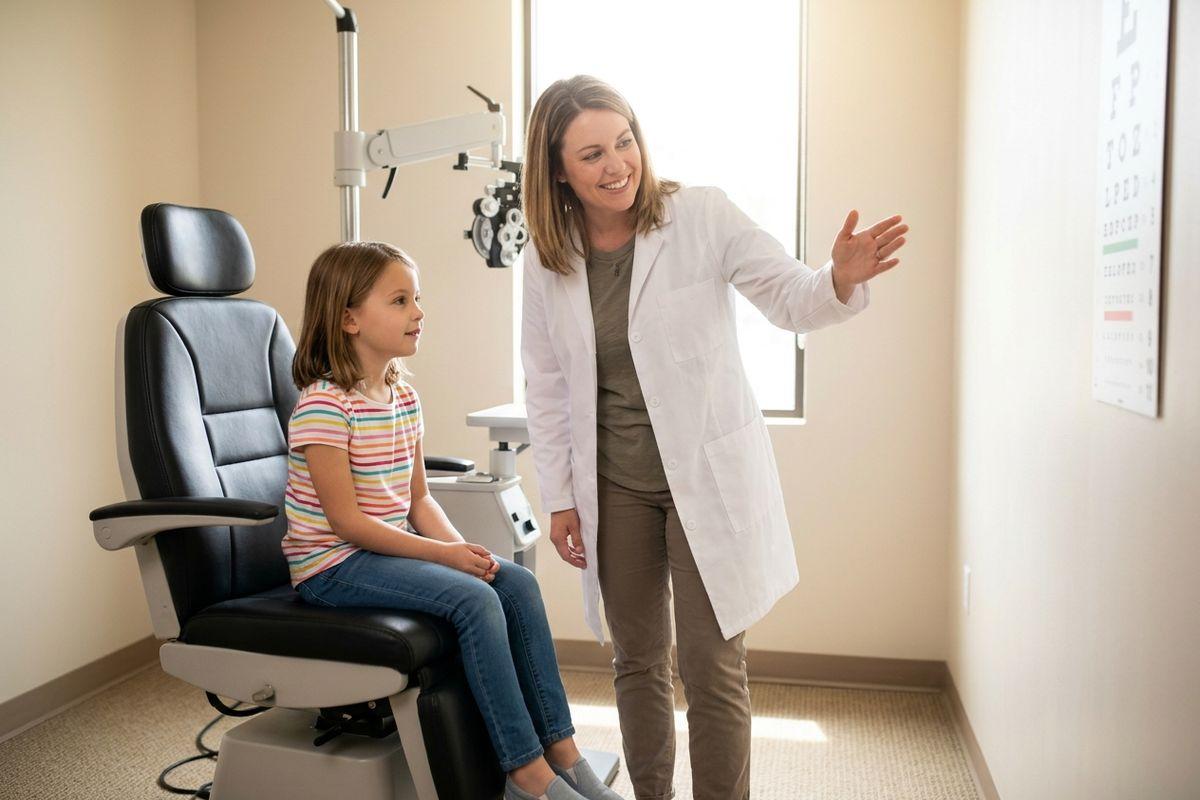
You may start with the familiar eye chart. Reading letters from across the room gives your optometrist a clear read on your visual acuity, which is how sharp your vision is at different distances.
Next, you’ll look through a device that flips between different lenses while your optometrist asks which one looks clearer. Your answers help pinpoint your exact prescription for glasses or contacts.
Beyond how clearly you see, your optometrist also checks the health of your eyes from the inside out. Expect a few different tests along the way:
- An eye pressure test screens for signs of glaucoma by measuring the fluid pressure inside your eye.
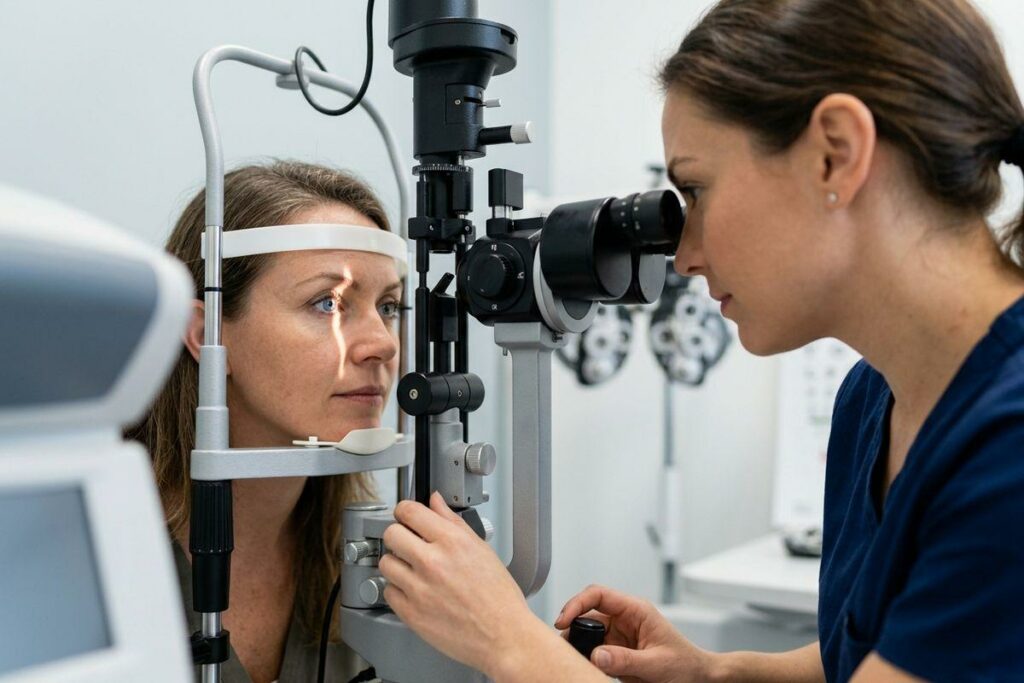
- A slit-lamp exam uses a bright light and magnification to get a close look at your cornea, lens, and other structures at the front of your eye.
- Retinal imaging gives your optometrist a detailed view of the back of your eye, which can reveal changes related to diabetes, macular degeneration, and other conditions.
If your optometrist wants a closer look at specific layers of your retina, they may also use optical coherence tomography. It’s a noninvasive imaging tool that captures detailed cross-sectional pictures without any discomfort.
Eye Dilation Exams: What to Expect
Dilation drops widen your pupils so your optometrist can see more of the inside of your eye. They take up to 30 minutes to fully kick in, so that time gets added to your visit. Once the drops are in, your close-up vision may feel blurry and your eyes will be more sensitive to light.
That sensitivity doesn’t go away when you leave. Your eyes can stay dilated for up to 6 hours after the exam, which makes driving uncomfortable and unsafe. Bring a pair of sunglasses to help with the light, and if possible, arrange for someone to drive you home. A little planning ahead makes the whole experience a lot easier on you.
Tips to Make Your Visit Smoother
A few small steps before your appointment can save you time once you’re there.
Fill out any paperwork through the patient portal ahead of time if your practice offers it. It cuts down on waiting room time and gets you into your exam faster.
Bring your current glasses and contact lenses, along with a list of any medications you take. Your optometrist uses that information to give you a more thorough exam.
Eye exams need to change as you get older, and they vary quite a bit depending on where a child is in their development. A young child’s exam looks nothing like what a senior might need, so don’t expect a one-size-fits-all visit.
Ready to See More Clearly?
Now you know what shapes your time in the chair, so hopefully it’s easier to plan around it. At our clinics, our team tailors every visit to you, whether you’re bringing in a little one for their first exam or coming in for yourself.
Reach out today and schedule your appointment at Fontana, Upland, Rancho Cucamonga and Rancho Cucamonga at the center for Aging.