
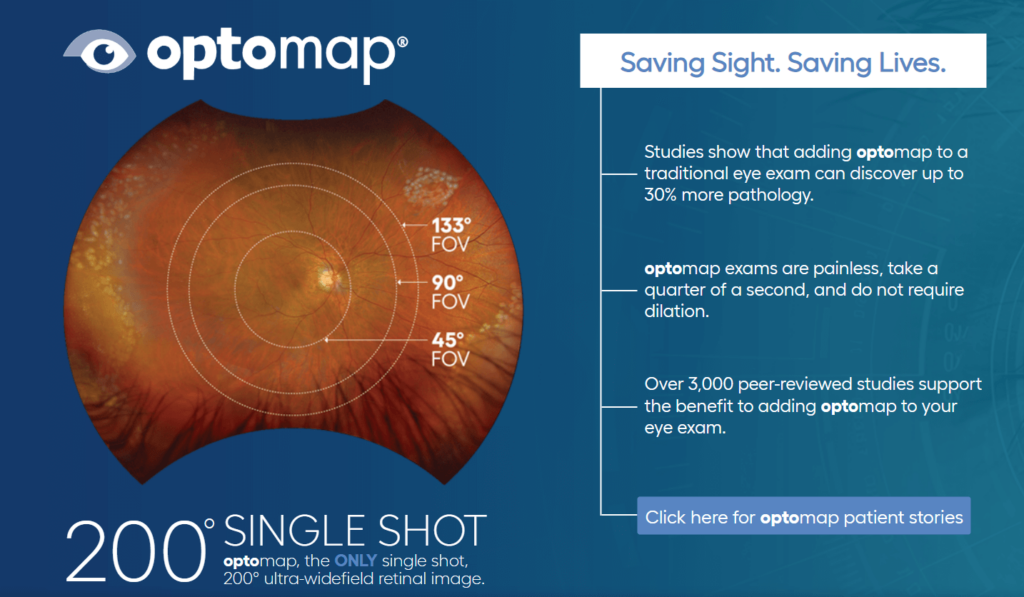
Have you ever wondered what the inside of your eye looks like? At a practice like Optometric Group of Fontana, Upland and Rancho Cucamonga, your doctor can use an Optomap to get a detailed, panoramic picture of your retina—the important part at the very back of your eye. This special image gives your eye doctor a super-wide view of your vision health without any discomfort.
The Optomap provides a comprehensive digital image of your retina, helping your doctor quickly and comfortably assess your eye health. The whole process is fast and simple. You just look into the device, one eye at a time, and you’ll see a brief flash of light. In a second, the picture is taken and ready for the doctor to review with you.
A Quick & Easy Snapshot of Your Eye Health
This retinal imaging captures a 200-degree view of your retina in a single, high-resolution image. This is a much wider view than what standard methods can achieve. It creates a digital record of your eye health that can be referenced year after year.
By comparing these images over time, your doctor can spot even small changes, track your eye health, and make informed decisions about your care. The process is so simple that almost anyone can have it done, from young children to seniors.
Optomap vs. Traditional Dilation
You might be familiar with the eye drops that make your pupils bigger for an exam. The process, known as dilation, is a standard way to see the back of the eye, but the drops can leave your vision blurry and sensitive to light for hours. The Optomap is a great alternative that an eye doctor in Fontana may offer.
Skip the Blurry Vision
The main benefit of an Optomap scan is that it gives a wide view of your retina without the need for dilating drops. This means you can get back to your day right away.
You can experience:
- No blurry vision after your appointment
- No bothersome sensitivity to bright lights
- The ability to drive yourself home immediately
When Dilation Might Still Happen
An Optomap is a fantastic tool, but it does not replace dilation in every single case. If the scan shows something that needs a closer look, the doctor might still use drops to obtain a magnified, 3D view of a specific area. It helps get the clearest picture possible for your health.
What Can an Optomap Scan Detect?
Because Optomap captures a wide image, it helps your eye doctor spot signs of potential eye diseases early. Think of it as a wellness check for the back of your eye. A single picture can help detect signs of various conditions, sometimes even before you notice any symptoms.
An Optomap can help find early signs related to:
- Diabetic Retinopathy
- Age-Related Macular Degeneration
- Retinal Tears or Detachments
- Glaucoma
- High Blood Pressure & Stroke
Why a Wider View Matters
Many eye conditions don’t always start in the center of your vision. Changes can begin in the outer areas of the retina, where they may not be visible with standard imaging. Unlike traditional retinal photos that capture only a small portion of the retina, Optomap imaging can capture up to 200 degrees—about 82% of the retina—in a single image, giving your eye doctor a much broader view of your eye health.
The Pros & Cons of an Optomap Exam
Like any technology, there are a few things to consider. Your eye doctor can help you decide whether it is the right choice for your exam and address any questions you might have.
The Upsides
- Fast & painless: The scan takes less than a second per eye.
- A permanent record: The digital image is saved in your file, making it easy to track changes in your eye health over time.
- Kid-friendly: It’s a great option for children who may have trouble with eye drops.
Things to Consider
- Follow-up needed: If the scan shows a potential concern, a follow-up dilated exam may still be recommended for a closer look.
- Cost: This scan is often an optional part of an eye exam and may have an additional fee.
Let’s Talk Cost & Insurance
It helps to know what to expect when it comes to payment. The Optomap is a powerful screening tool, but it is not always covered by vision insurance for a routine check-up. The team at your eye doctor in Upland can explain the specifics for you.
The cost is usually a small out-of-pocket fee—often around $40. Many people feel the convenience of skipping dilation is well worth it. You may also be able to use funds from a Flexible Spending Account (FSA) or Health Savings Account (HSA) to pay for it.
How Optometric Group Can Help You
At Optometric Group of Fontana, Upland and Rancho Cucamonga, the team is happy to help you make informed choices for your vision. Ask about adding an Optomap scan to your next eye exam to get a complete picture of your eye health.